



From my perspective, a lot of athletes neglect their greatest strengths.
They spend most of their time fixing weaknesses instead of maximizing strengths.
I’m not saying athletes should never work on their weaknesses. However, most of the better athletes I’ve worked with focused a majority of their time on that which gave them a disproportional advantage.
Each athlete is typically better in one or two aspects of their sport. And usually, they never find out how good they could have been because of their desire to be well-rounded.
There are certain athletes who possess one or two extraordinary traits, and they discover them early. If that’s you, this is your permission slip to lean in.
Elite performance is asymmetrical.
Barry Sanders wasn’t great because he was balanced. He wasn’t. He was great because he was impossible to touch. Everyone knew what he was going to do, but not how. Didn’t matter. You can’t hit what you can’t catch.
Same with Jerome Bettis. Everyone knew he was running downhill. Through you. Didn’t matter.
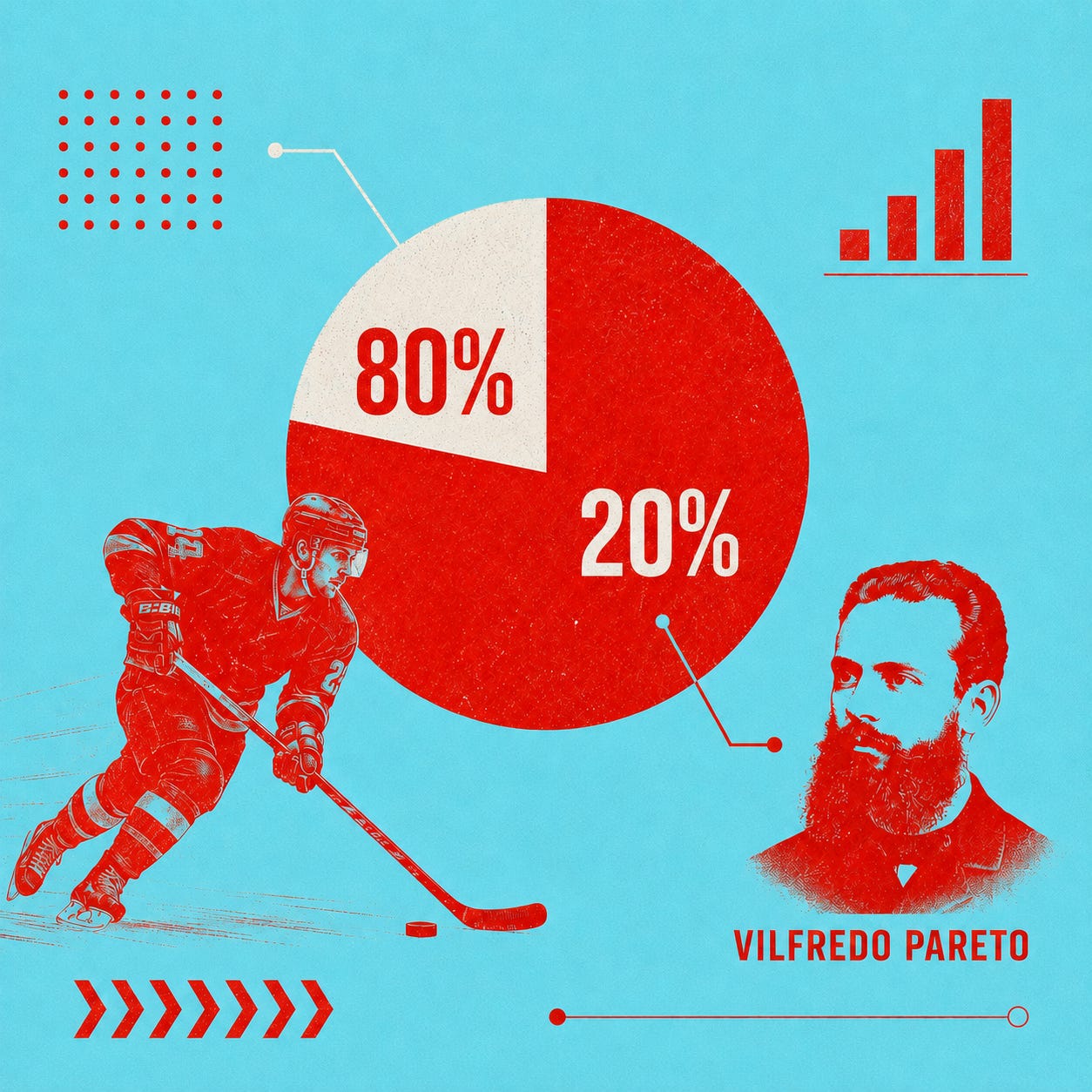
Our world operates under power laws. The highest performers understand this.
A tiny percentage of their traits produce the overwhelming majority of their results.
A lot of coaches claim to love “well-rounded.” And perhaps they do (or think they do). But even they tend to bank on their asymmetrical players.
The most dangerous athletes tend to be uneven.
One has absurd vision.
Another has freakish speed.
Another scores from impossible angles.
For them, those traits ARE the thing. Everything else is minutia.
That doesn’t mean weaknesses should be blindly ignored. If a weakness keeps you off the field, fix it.
But if you’ve discovered the thing that separates you from everyone else, I strongly encourage you to spend the majority of your time there.
Because spending years sanding down your edges often destroys the thing that made you dangerous in the first place.
Don’t mistake high-agency traits for laziness.
The kid who hates conditioning but can’t put the hockey stick down? Maybe they’re lazy. Or maybe they have the best hands on the team.
That’s the part most systems miss.
Obsession is directional. Athletes naturally drift toward the parts of the sport they’re built for.
And usually, what athletes enjoy most is connected to what they’re best at.
The obsession creates the iteration-based reps. Those reps create the outlier.
Good CEOs understand this.
They hire marketers to market.
Builders to build.
Designers to design.
Salespeople to sell.
Nobody walks into a company and says: “We need everyone equally competent at everything.”
That would be ridiculous.
The best athletes eventually force reality onto the system. If they are dominant enough at one thing, the game bends around them. That’s just on the field.
From a business perspective, it can help shape your brand. It can become a large part of who you are off the field. An identifier of sorts.
Discover your natural proclivities and figure out where they are best utilized.
If you’ve found the thing that makes you different… Unapologetically lean in.
The rest will take care of itself.
INNO ATHLETE
Helping athletes think clearly about performance, strategy, and business.
Connect: Website | Tiktok | Instagram | Facebook | X | LinkedIn | YouTube